

How Code Orange replaced a DIY ePaper hack with TRMNL Booking
Code Orange
Amsterdam software studio Code Orange needed meeting-room signs that looked professional, without maintaining new infrastructure.
5
devices deployed
Meet Code Orange
Code Orange is an Amsterdam software studio that builds tools and takes on complex consultancy for mission-critical custom solutions. The team works out of a bright office on Lindenhoevestraat, with glass-walled meeting rooms that actually get used.
Customer: Code Orange
Location: Amsterdam, Netherlands
Contact: Tim van Dalen, CTO & Founder
Stack: Google Calendar + TRMNL Booking
Footprint: 4 bookable resources live (one more on the way), 5 TRMNL devices across the org
The problem
Before Booking, Code Orange briefly ran a homebrew setup: a Raspberry Pi with an ePaper HAT adapter. It proved the idea, but left a couple things to be desired:
We briefly had a self-built solution in place based on a Raspberry Pi, but a) it was ugly and b) we didn't want to maintain it ourselves.
They needed something that still felt open enough for a technical team to poke at, without becoming another internal product to babysit.
Why TRMNL Booking
Tim described the decision as a balance of done-for-you and customization:
TRMNL is the right balance between open enough to poke around and managed externally for us. If we need to, we can drop down to a custom solution without it being ugly or without us having to do all the infrastructure, but the Booking app is elegant enough that it's a great solution at this price point.
The same theme showed up when he talked about the hardware in general:
The devices look professional, but we are able to tweak them ourselves if we want to.
Walk-up booking (via QR codes) was initially met with some skepticism:
Initially I thought the booking feature/QR code would be an anti-feature for us, but I think your implementation is actually good.
I want our Google Workspaces resource to be the source of truth, but we have a few people in the office now from an org that's on Microsoft, so we can't easily make those rooms bookable for them. This might be a nice compromise.
Thanks to the Collection display on the office manager's desk, guests and tenants alike are able to see what's available without walking around or having personal access to Code Orange systems.
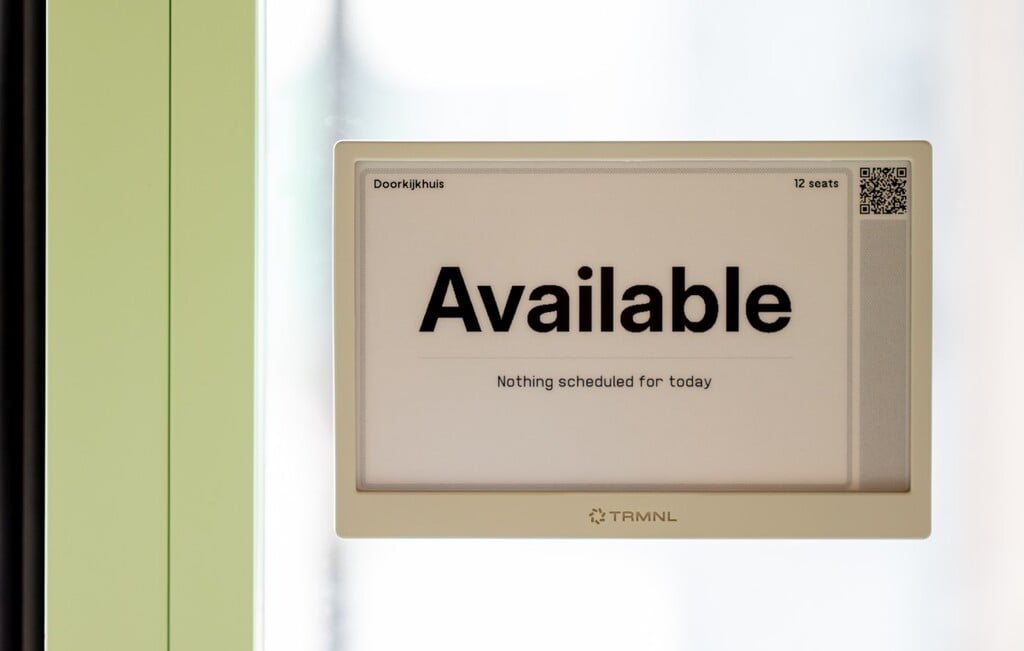
Door display on Aquarium (2 seats) — Available status and a QR for walk-up booking.
The setup
Code Orange runs Booking against Google calendars. Setup was intentionally uneventful:
The actual setup was a breeze, and for the rest I've sent in any feedback I had!
On the wall today:
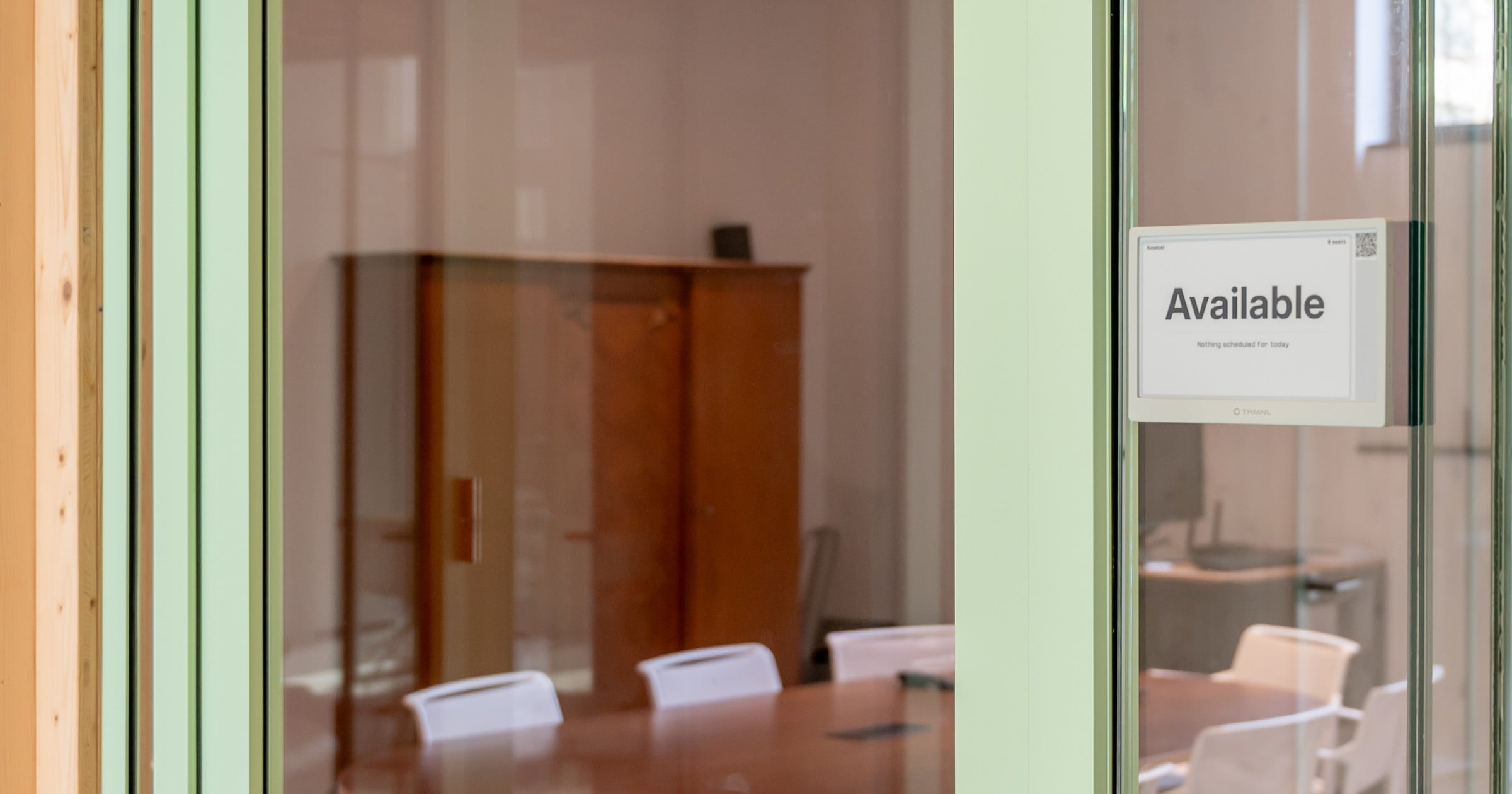
- Individual room signs for meeting spaces like Koelcel and Aquarium, in a sage enclosure to match their office's accent color.
- A collection layout that shows multiple rooms at a glance (grid of availability + the room that's occupied), which lives on the office manager's desk for a top down view.
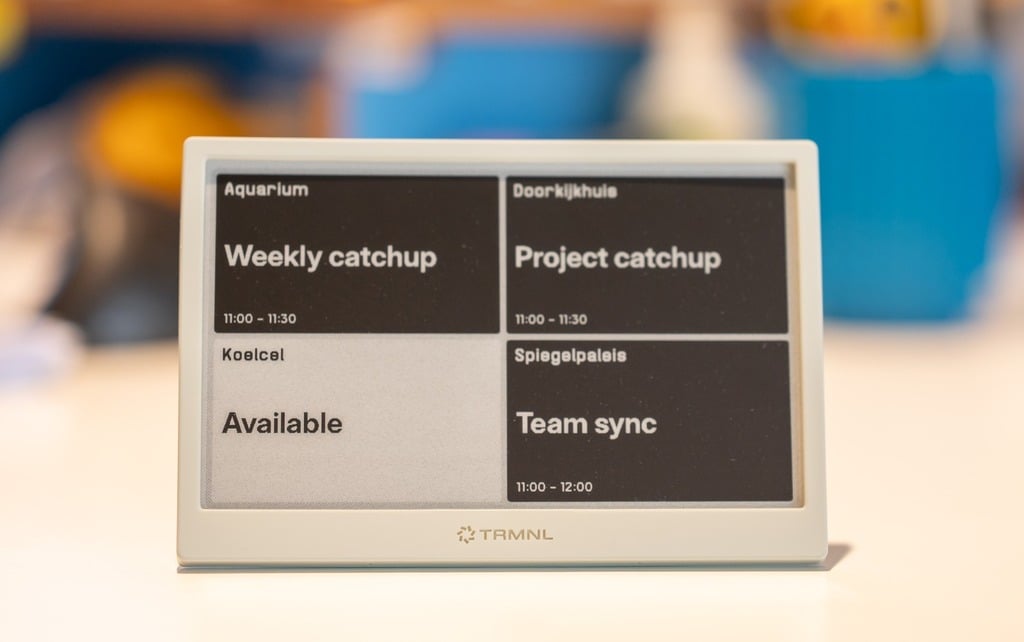
1-to-many collection: Aquarium, Doorkijkhuis, Koelcel, and Spiegelpaleis on one glanceable board.
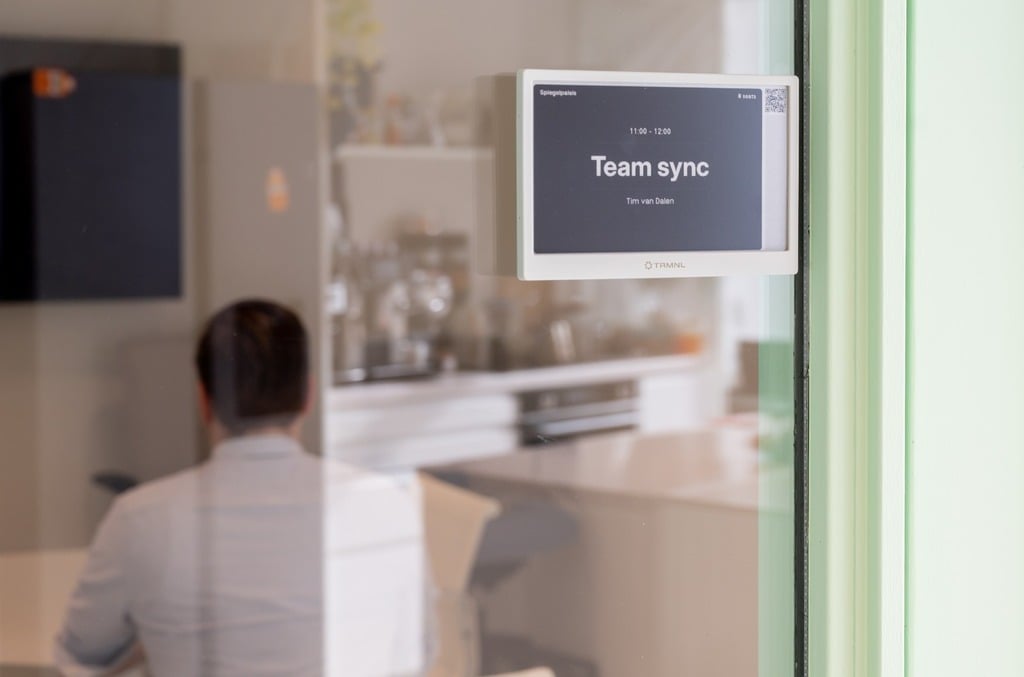
Aquarium (2 seats) — compact room, same Booking UI language as the larger spaces.
What they value most
Asked to rank Booking features, Code Orange scored highest on:
Feature | Score (1–5) |
|---|---|
Documentation | 5 |
Time format setting | 5 |
Fast refresh (≤ 5 minutes) | 4 |
1-to-many layouts (grid / list collections) | 4 |
Walk-up booking (QR scans) | 3 |
Lower priority for them right now: custom logo branding, calendar name overrides, single-calendar dedicated layouts, and a few advanced sync settings.
The result
Code Orange got what the Raspberry Pi project promised, without the wires or maintenance tax:
- Professional hallway presence — devices that match the office (sage accent colors)
- Managed Booking app — Google rooms stay the source of truth
- Room for curiosity — still open enough for a software team that likes to tinker
- Room to grow — four resources live, a fifth planned, five TRMNLs already in the building
Try Booking
If you're replacing sticky notes, tablets that never stay charged, or a DIY ePaper experiment of your own, start here:
Case study based on Code Orange's survey responses (September 2026) and on-site photos from their Amsterdam office. Quotes lightly edited for clarity.
